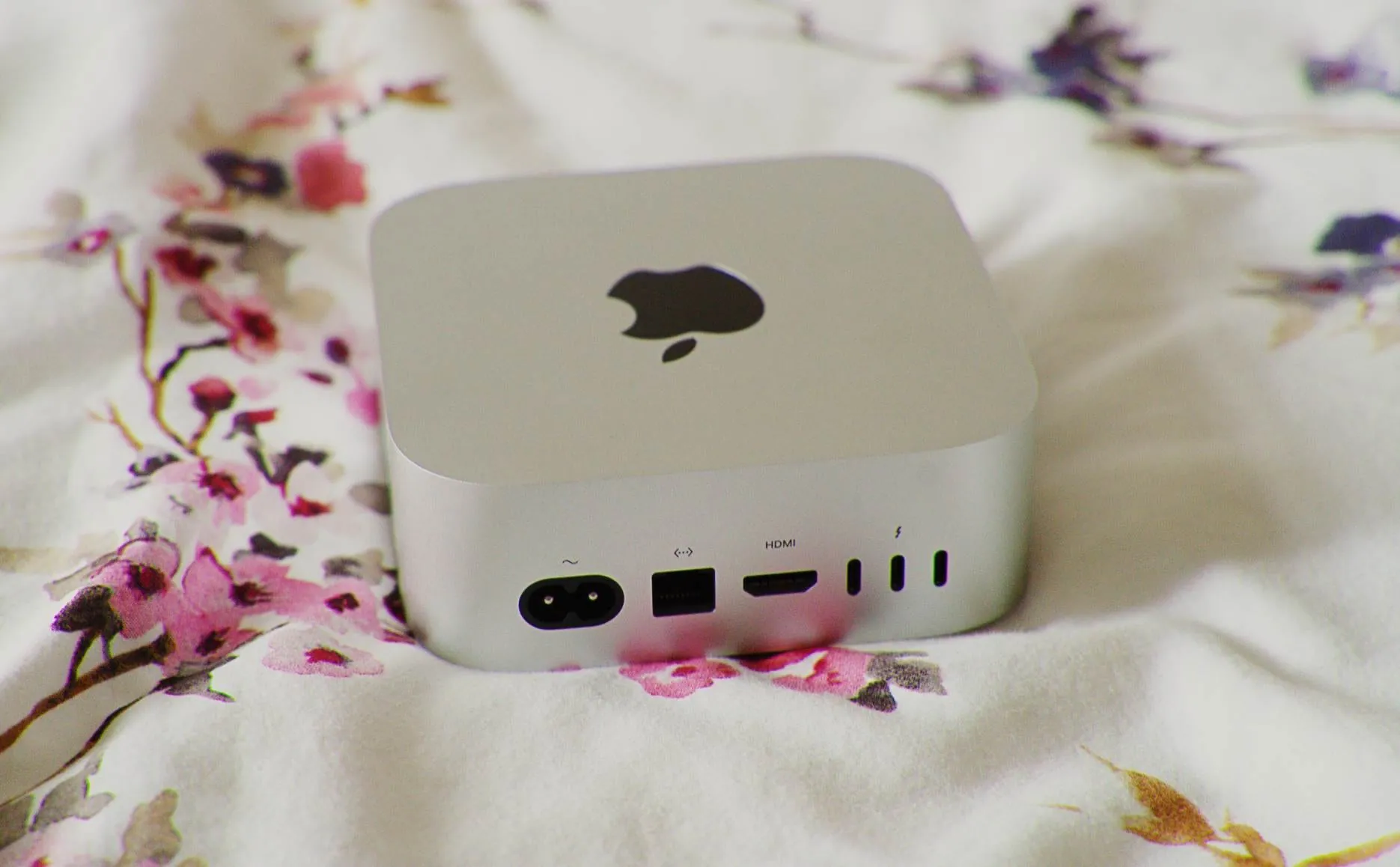
Mac Mini M6 (2026)
Apple's first 2nm chip lands in their most accessible desktop offering, but much like the performance, the price of entry has climbed.
Overview
The Mac Mini M6 officially released today on September 22, 2026. My configuration has 24GB of unified memory and 512GB of storage, and a cost of €1,519 in Ireland. I purchased it myself at full price. Apple did not provide or sponsor this review.
The least expensive configuration now costs $899, or €1,079 in Ireland, with 16GB of memory. Component shortages and rising costs have pushed the baseline price of many computers upwards, and Apple is no exception. Direct comparisons with both the previous base Mac Mini and recent Apple Silicon chips particularly important.
I have a number of comparison systems available for testing throughout this review, including the entry-level SKU of the M4 Mac Mini that this replaces, and the MacBook Neo which sports a much weaker SoC, but represents the new lowest entry point into the Mac ecosystem that the Mac Mini once held.
The Familiar Small Desktop
Externally, this is the same small Mac Mini chassis Apple introduced in 2024. There is no display or microphone, and the basic built-in speaker remains. The interesting changes are inside, where the base M6 combines a 12-core CPU, 12-core GPU, two 16-core Neural Engines, all manufactured using TSMC's new 2nm N2 process.
Connectivity has also moved forward quite a bit. The M6 model includes:
- Wi-Fi 7 (160MHz only) and Bluetooth 6
- 2.5Gb Ethernet, configurable with 10Gb Ethernet
- Three Thunderbolt 4 ports
- Two USB-C ports supporting up to 10Gb/s
- HDMI
- A 3.5mm headphone jack
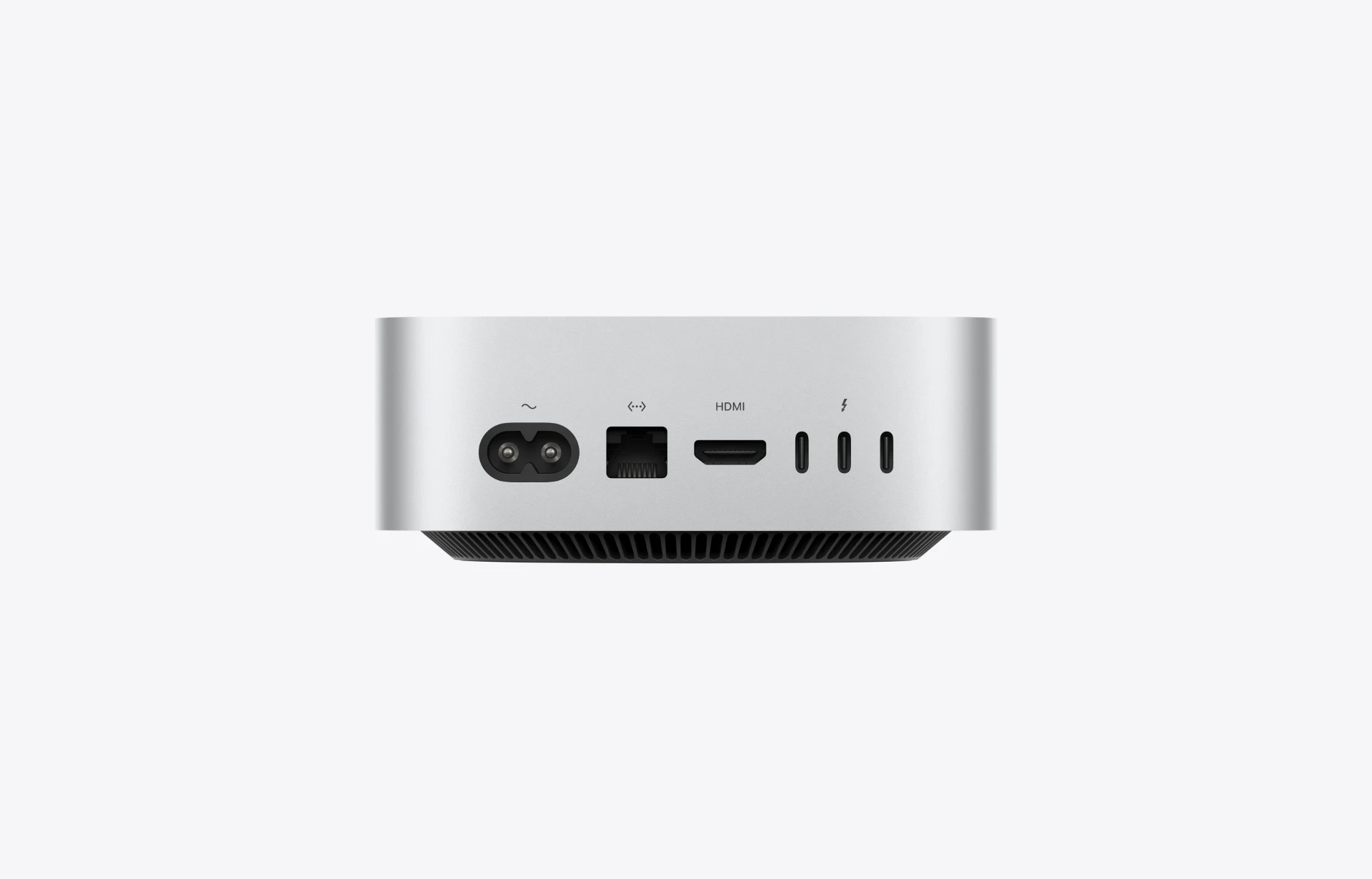
There is also an M5 Pro Mac Mini with Thunderbolt 5. That may be the better fit for workflows built around fast external storage or high-bandwidth peripherals or you really need the extra GPU horsepower, but the M6 is the more interesting machine for CPU performance at the lowest price of entry, particularly due to it leveraging the latest core architecture Apple has available.
Why the M6 Matters
The M6 has a three-tier core topology, first seen in the M5 Pro onwards (base M5 was P+E). This means there are three class of CPU cores available in the core complex, starting from 6 efficiency cores, 4 performance cores and finally 2 'super cores'. The stated intent behind this architecture is to continue pushing the boundary on single-threaded capability while making multi-threaded performance more efficient. Without a look at the die area, it's unclear what this means underneath, but it likely translates to larger L1 caches available to the super cores, along with wider decode/out-of-order windows. I'll leave that discussion to folks with more equipment and brains than I.
What attracts me most personally is the prospect of getting leading single-threaded performance in Apple's cheapest desktop. That matters well beyond benchmark charts. The emulation scene on macOS is thriving, with many emulators implementing Metal or MoltenVK backends, and accurate PC emulation in particular lives or dies on the speed of one core, which gets its own page in this review.
The question for this review is not simply whether the M6 is faster than the M4, but rather whether that speed changes what the smallest Mac can do, and if that justifies a higher starting price.
The Headline Numbers
The testing is done, and the short read is honestly that the chip delivers great performance.
Cinebench 2024 gives 219 single core (thread*, but Cinebench labels otherwise) and 1,392 multicore, against 172 and 881 on the base M4, a 27% single-core and 58% multi-core generational gain between the products.
Cyberpunk 2077 at native 1080p Medium averages 55.9 fps with a 46.6 fps floor, up 73% on the M4. At native 1080p Ultra without ray tracing, the M6’s 37.5 fps is close to the desktop RTX 3050 8GB’s 39.9 fps in TechPowerUp’s results. That is a useful indication of how far the integrated GPU has come, with the different test setups covered on the gaming page.
Best of all, 86Box holds a flat 100% emulating a 600MHz Pentium II with a Voodoo 3 and live audio, against 500MHz on the M4. That is on my custom 6.0 build with extended frequency tables, covered on the emulation page.
Small local models also run comfortably in LMStudio using the MLX backend, with 31.5 tok/s on 8-bit Qwen 4B, 111.8 on LFM 2.5, with larger models feasible if you're patient.
Each page below has much more detail, I'd encourage you to check out the rest of the review!
What I Am Testing
The review is split into focused pages covering the M6 architecture, package power and thermals (once I have them), Cinebench & LLVM compilation, local LLM inference, gaming, and the value argument against current component prices. Every result will include the M4 Mac Mini where a direct comparison is useful, among other devices. The Windows desktop is a gaming and local-inference reference and just happens to be the machine I have to hand, and the 64GB M1 Max is a local-inference anchor to represent the best of first generation Apple Silicon.